Features
Repairing inconsistent adhesion across a hoodie transfer run case
A hoodie heat-transfer run failed at one graphic corner, and the fix came from pad condition and garment loading, not from adding more press time.

Archive
Features
A hoodie heat-transfer run failed at one graphic corner, and the fix came from pad condition and garment loading, not from adding more press time.
Rules
Lifting edges, scorch marks, carrier lines and residue trace back to film, adhesive, heat, pressure, peel and care, and each cause has its own fix.
Maintenance
Heat-transfer production checklist for cutter, film, carrier, garment, placement, press, pressure, temperature, time, peel, inspection, wash tests, and release.
Reviews
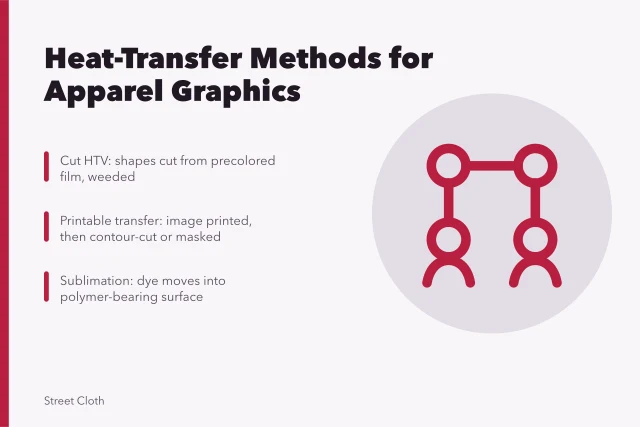
Apparel heat-transfer methods compared across image, film, adhesive, carrier, garment, cutting, printing, color, hand, heat, quantity, care, testing, and records.
Guides
How to apply a heat-transfer graphic and verify it covers cut settings, weeding, placement, press time, peel temperature, and wash tests that decide release.
Features
Atlanta streetwear graphic apparel grows from independent brands, local print shops and drops that turn music, HBCU culture and Southern imagery into wearable art.
Rules
Copyright and trademark graphic apparel: how US law treats slogans, logos and character prints, what fair use covers, and how to document artwork permissions.
Maintenance
Miami heat transfer print durability depends on humidity, salt air and press moisture control, plus adhesion and wash testing before any run ships.
Rules
OSHA rules print shop ventilation set the baseline for exhaust, chemical storage and heat safety in US screen-printing and heat-transfer shops.
Rules
US apparel labeling rules for graphic shirts cover FTC fiber content, country of origin marking, care wording and label placement on neck, seam or hangtag.
Guides
A heat transfer is a material system: film, adhesive, artwork, cutting, weeding, placement, pressing and testing all decide whether it survives the wash.
Features
DTG or DTF selection case for a short mixed-garment launch, using artwork, fabric, placement, hand, schedule, sample tests, costing, approval, and records.
Features
A three-color run drifts at garment 37 because the platen lost its hold, not because the screens moved. Here is how the shop found it and restarted.
Features
Low-resolution shirt graphic case covering intake, rights, vector rebuilding, raster texture, type, color plates, proofing, approval, and records.
Features
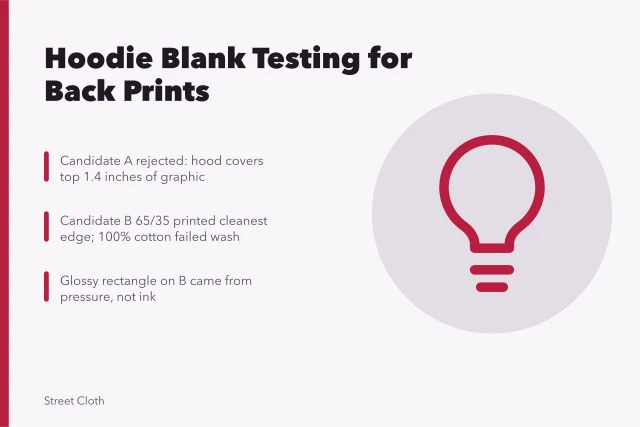
Three hoodie blanks tested against one 10-inch three-color back print, showing why the cheapest garment lost and what the approval had to freeze.
Features
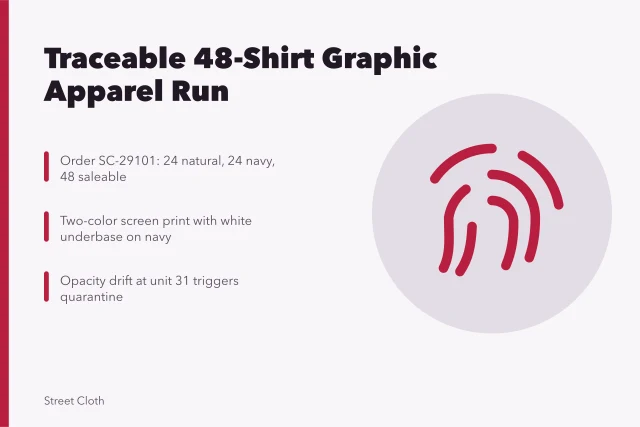
Traceable 48-shirt run case with size mix, verified blanks, artwork control, rights approval, proofs, production checks, labels, packing, and reconciliation.
Rules
White-ink settling, banding, color shift and wash failure traced through nozzles, pretreatment, film, adhesive, press settings and cure records.
Guides
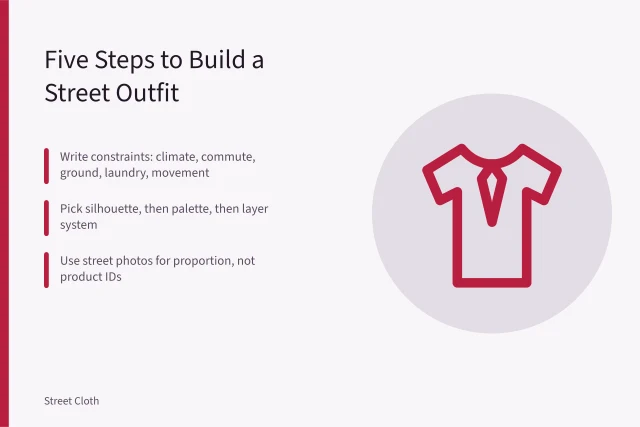
How to choose street style in five steps: write the constraints, pick a silhouette and a palette, choose a system of layers, then buy slowly and test it.
Rules
Textile screen-printing problems guide for diagnosing pinholes, fibrillation, ink pickup, weak opacity, registration error, undercure, contamination, and drift.
Guides
Nine street style mistakes in dressing to be photographed outdoors and in publishing the result, with a ten-minute check that catches most of them.
Guides
Street style reviews done properly: the tests worth running, why those and not others, what a review must disclose, and a protocol for one afternoon.
Rules
Diagnose pixelation, missing fonts, stray plates, weak underbases and moire by finding the first production stage where each specific defect appears.
Rules
Garment blank problems like dye migration, shrinkage, scorching and mixed batches require separating fabric faults from press faults and testing one variable.
Features
Street style has three parties and three motives: arranged versus candid photographs, the permission question, and the commercial layer nobody labels.
Rules
Graphic apparel production problems like unclear briefs, wrong blanks and print drift get traced to a cause, contained and stopped from repeating.
Guides
Apparel artwork guide to output size, vector and raster files, effective resolution, type, color, separations, underbases, traps, halftones, and proofs.
Maintenance
Apparel artwork preflight verifies file setup, fonts, color separations and proofs before screens or stitch data are cut, so the final proof matches what ships.
Guides
An apparel blank guide to fiber, knit structure, weight, color, seams, fit and print behavior, so decorators qualify blanks before ink touches cloth.
Guides
Mesh, stencil, ink, squeegee, registration and cure decisions that hold a screen-printed garment together from artwork to final quality inspection.
Reviews
Fiber, knit, dye and finish decide how cotton, polyester, blends, fleece and performance knits behave under a squeegee, a press or a needle.
Reviews
Five apparel production roles compared by what they own, what they hand off, and which failures land on whose desk when a finished order ships.
Guides
How DTG and DTF differ in ink path, pretreatment, white laydown, transfer and cure, and the records that make a repeat order print the same.
Maintenance
Digital apparel printing checklist for files, garments, pretreatment, DTG and DTF equipment, film, adhesive, heat, maintenance, tests, release, and records.
Reviews
Direct-to-garment, direct-to-film, sublimation, and screen printing differ in substrate, ink, heat, and hand feel. Match the method to the garment and order size.
Guides
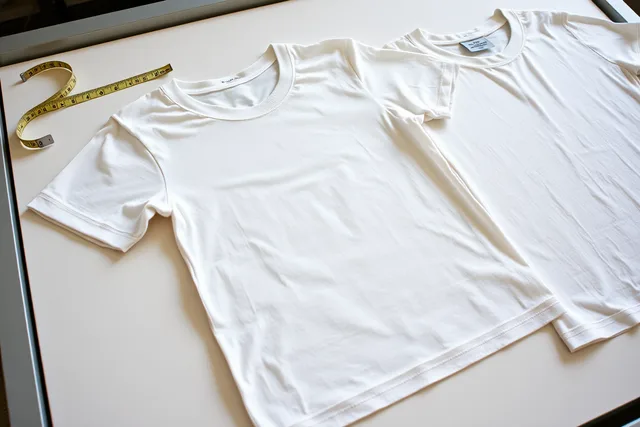
A blank is approved only when the ordered garment, in its real colors and sizes, survives the exact decoration and wash sequence you will run.
Maintenance
Garment blank checklist for identity, fiber, fabric, color, finish, seams, dimensions, shrinkage, heat response, decoration trials, care, approval, and batches.
Maintenance
A gate-by-gate graphic apparel checklist covering brief, artwork rights, blanks, fit samples, first-off approval, inspection and final release.
Guides
Graphic apparel production guide to briefs, garment blanks, artwork, print methods, samples, proofs, production controls, inspection, release, and records.
Guides
Plan a first graphic T-shirt run by freezing the blank, locking artwork rights, approving a physical proof, and logging every setting you change.
Guides
A print-ready apparel package gives the screen shop approved art, exact dimensions, plate definitions, ink callouts and a revision it can confirm on receipt.
Guides
Qualify a DTG or DTF build by locking the file, pretreatment, heat press settings and wash test before the run, so the approved sample matches what ships.
Maintenance
Textile screen-printing checklist for artwork, screens, stencils, inks, press setup, garments, registration, strokes, flash, cure, inspection, cleanup, and release.
Guides
A two-color screen print holds its registration only when the separations, screens, ink mixes, stroke settings and cure records are frozen before the first pull.
Reviews
Apparel artwork types compared across structure, scaling, color, plates, tone, separations, editability, proofing, production limits, and suitable graphic uses.
Reviews
Textile screen-printing inks compared across film, hand, opacity, garment limits, stencil, mesh, flashing, cure, testing, cleanup, safety, waste, and records.