Reviews
Part of Graphic apparel quality guide: appearance, placement, cure, adhesion, stretch, laundering, and care
Apparel print tests compared: inspection, stretch, crocking, adhesion and laundering
Apparel print tests compared by purpose, evidence, limits, controls, and blind spots across visual, stretch, rubbing, adhesion, dimensional, and wash checks.
What to take away
- Each test answers a different question, so one passing result cannot stand in for the others.
- Visual inspection needs controlled light, references, locations, and written defect limits.
- Stretch and adhesion screens must match the decoration and cannot be treated as universal standards.
- Crocking measures color transfer by rubbing, not every kind of print wear.
- Dimensional and laundering checks need recorded conditioning, care variables, and measurement points.
- Choose a test set from the product risk, method, claim, and expected use.
Quality tests are decision tools. Their value depends on a clear response, controlled method, representative sample, and prewritten limit. A test name without those elements creates a false sense of precision.
Quick comparison
Apparel Print Tests Compared
Check
- Visual inspection
- Match approved appearance
- Stretch screen
- Tolerate extension
- Crocking
- Color transfer
- Adhesion screen
- Resist challenge
- Dimensional change
- Dimensions move
- Laundering
- Respond to care
Main question
- Visual inspection
- Defect map
- Stretch screen
- Crack or lift
- Crocking
- Staining grade
- Adhesion screen
- Edge or force
- Dimensional change
- Before-after measurements
- Laundering
- Interval observations
Evidence
- Visual inspection
- Hidden cure weakness
- Stretch screen
- Laundering abrasion
- Crocking
- Peeling shrinkage
- Adhesion screen
- Color change
- Dimensional change
- Surface color bond
- Laundering
- Outside wear conditions
Blind spot
- Visual inspection
- Stretch screen
- Crocking
- Adhesion screen
- Dimensional change
- Laundering
Main question
- Visual inspection
- Does the cold garment match the approved appearance?
- Stretch screen
- Does the graphic tolerate defined extension and recovery?
- Crocking
- Does color transfer under controlled rubbing?
- Adhesion screen
- Does a bonded layer resist the named challenge?
- Dimensional change
- How do garment and graphic dimensions move?
- Laundering
- How does the full build respond to defined care?
Typical evidence
- Visual inspection
- Defect map, reference comparison, dimensions
- Stretch screen
- Crack, split, lift, or recovery result
- Crocking
- Staining grade or measured transfer
- Adhesion screen
- Edge, area, or force result
- Dimensional change
- Before-and-after measurements
- Laundering
- Interval observations and measurements
Common blind spot
- Visual inspection
- Hidden cure or bond weakness
- Stretch screen
- Laundering chemistry and abrasion
- Crocking
- Peeling, shrinkage, and overall wash wear
- Adhesion screen
- Color change and garment movement
- Dimensional change
- Surface color and edge bond
- Laundering
- Wear conditions outside the care cycle
Visual inspection
Use visual inspection for placement, orientation, color sequence, opacity, registration, detail, edges, unwanted marks, scorch, shine, stain, hand, and garment damage. Define lighting, viewing distance, background, angle, conditioning time, reference, and defect limits.
Inspect the full garment, then named critical zones. Measure placement from stable points. Record a defect by location and extent instead of saying it is "minor." Visual inspection is fast and broad, but it cannot prove cure, adhesion, wash durability, or color transfer.
Stretch screen
A stretch screen can expose splits, whitening, edge lifting, weak coverage, excessive stiffness, or poor recovery. Specify the direction, extension, rate, hold, repetitions, conditioning, and pass rule. Compare decorated and undecorated material because the garment itself may not recover fully.
The method must fit the product. Pulling every shirt "as far as it goes" applies different strain to different fabrics and operators. A passing chest print may still fail where the same system crosses rib, fleece, or a seam.
Crocking or rubbing
Crocking is color transferred from a colored textile surface to another surface under controlled rubbing. The AATCC summary for TM8 crocking says the method uses white test cloth in dry and wet procedures and assesses transferred color with named scales.
It also identifies scope limits, including very small print areas. This supports treating rubbing transfer as its own response, not as a synonym for adhesion or wash durability.
An informal white-cloth rub can serve as an internal screen only when its force, path, repetitions, wet condition, cloth, and judgment are fixed. Do not report a standard grade unless the current standard procedure and required apparatus were used.
Adhesion screen
Adhesion checks whether a bonded print, film, patch, foil, or layer remains attached under a named challenge. The challenge may involve edge probing, flex, a defined tape, peel geometry, or a method supplied for the exact system. Record temperature state, sample age, direction, area, tool, rate, and result.
Do not borrow a coating, paint, or packaging adhesion method and assume its result describes textile wear. Stretch fabric, porous yarns, irregular deposits, seams, and flexible adhesive films can invalidate that transfer. Supplier instructions are a starting point; the complete decorated garment still needs qualification.
Dimensional-change test
Mark stable points and measure garment length, width, sleeves, seams, graphic width, and graphic height as required. Condition specimens consistently before each reading. Report change by direction and distinguish it from skew, twist, puckering, and local distortion.
Use represented sizes and materials. A large rigid graphic can restrain the fabric locally while the surrounding knit changes, producing ripples even when the graphic dimensions move little.
Laundering test
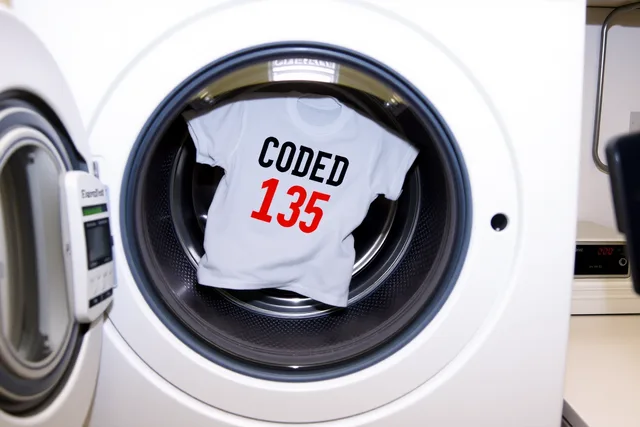
Laundering combines water, detergent, mechanical action, load, temperature, drying, and repeated conditioning. It can expose color loss, staining, cracks, peeling, abrasion, tack, garment movement, and graphic distortion. Record every variable and compare with an unwashed control.
AATCC describes TM61 accelerated laundering as an evaluation of textile colorfastness for materials expected to withstand frequent laundering, using controlled detergent, temperature, bleaching, and abrasive conditions. Its summary says the test roughly approximates certain repeated effects. It does not claim to predict all consumer care or every failure of a decorated garment.
Choose a combined test set
Select checks from failure risk:
- large solid screen print: appearance, cure evidence, stretch, rubbing, and laundering;
- film transferappearance, edge bond, flex or stretch, and laundering;
- dye-sublimated imageappearance, color, dimensional change, and laundering;
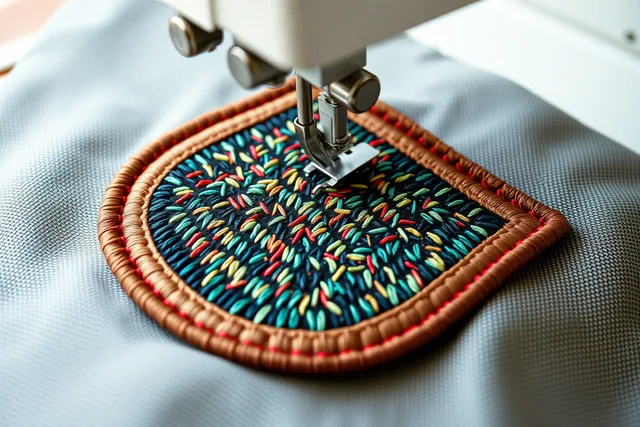
- embroidered patch: appearance, attachment, abrasion or flex, and care;
- mixed decorationinspect interfaces as well as each component.
Document which property each test covers and what remains outside scope. A release decision is stronger when several different checks address different failure paths.
Common questions
Is crocking the same as abrasion resistance?
No. Crocking evaluates color transfer under a specified rubbing procedure. Abrasion damage and long-term wear can require different methods.
Can a stretch test prove adhesion?
It can reveal some bond failures under extension, but it does not measure every adhesion condition.
Should dimensions be measured while the garment is warm?
Use the specified conditioning period and state it. Warm, stretched, or damp measurements are not directly comparable with relaxed ones.
Which test matters most?
The answer depends on the product, decoration, claim, use, care route, and likely failure. Most production releases need more than one check.