Maintenance
How Miami heat and humidity affect heat-transfer prints and wash durability
Miami heat transfer print durability depends on humidity, salt air and press moisture control, plus adhesion and wash testing before any run ships.
What to take away
- Miami heat transfer print durability is decided less by the film brand than by moisture, salt air and how you press and store.
- Summer humidity in Miami sits high year round, so garments carry absorbed moisture into the press and weaken the adhesive bond.
- Salt air corrodes press platens and hardware and shortens transfer film shelf life in open shop storage.
- A repeatable adhesion and wash test program catches lifting edges before a run leaves the building.
- Press settings for humid garments need longer dwell and pre-pressing, not just more temperature.
- Document every test result so a failed run can be traced to film lot, garment lot or press settings.
How South Florida heat and humidity stress a heat-transfer bond
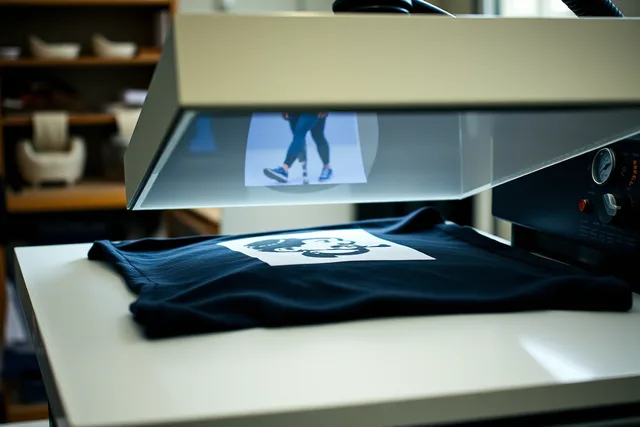
Miami heat and humidity do not attack a print the way abrasion does. They attack the bond while it forms. A heat-transfer adhesive is a thermoplastic: it must reach a specific temperature, stay there long enough, then cool under pressure. Moisture in the garment and in the air steals heat during that window.
Cotton and cotton blends absorb water from Miami air. A shirt pulled from a warehouse rack on a wet September morning can hold several percent moisture by weight. When the press closes, that water turns to steam.
Steam pushes back against the adhesive and leaves micro-gaps at the interface. The print looks fine at the dock and lifts at the first wash.
Heat also changes the film itself. Transfer film stored in a shop without air conditioning cycles between warm days and cooler nights. Repeated expansion and contraction can make the carrier release unevenly, which shows up as a dull or patchy transfer.
Worker heat exposure is a separate problem. Press operators in a Miami shop without airflow face real heat stress, and OSHA publishes heat guidance covering both outdoor and indoor work environments.
Ventilation matters for more than comfort. Fumes from adhesives, carrier coatings and cleaning solvents accumulate in a closed, humid room. OSHA ventilation rules for general industry set the baseline for how that air should move through the space.
Salt air, storage and film shelf life in Miami shops
Salt air is the quiet variable. Miami shops near Biscayne Bay or the beach keep their doors open for airflow, and that airflow carries chloride. Chloride settles on press platens, metal film racks, cutting blades and the silicone pads you press against.
Rust and pitting on a platen change the surface the garment sits on. A pitted platen transfers heat unevenly, so one corner of a print gets less energy than the rest. That is one reason a run can fail at the edges while the center holds.
Transfer film storage is where salt air and humidity combine. Film stored in an open box on a shelf absorbs moisture through the carrier and the adhesive layer. Once that happens, the film releases sluggishly, and you compensate by raising temperature, which risks scorching.
Keep film in sealed bags or a closed cabinet with a desiccant pack. Rotate stock so older film moves first. If a roll has been open for months in a humid shop, test a sample before committing it to a client run.
Hazard communication applies to every chemical in that storage area. OSHA hazard communication rules require labels and safety data sheets for the adhesives, cleaners and coatings your staff handles, and those sheets tell you the storage temperature range the manufacturer expects.
Personal protective equipment belongs in the same conversation. OSHA's PPE overview covers eye, hand and respiratory protection, and gloves matter when you handle hot platens and solvent-based cleaners in a humid room.
Adhesion and wash testing methods a Miami shop can repeat
Adhesion testing is a pull test, not a feeling. Press a sample, let it cool completely, then try to lift an edge with a fingernail or a dull blade at a shallow angle. Note whether the film peels cleanly, tears, or brings garment fibers with it.
Adhesion and Wash Test Sequence
- Press three samples at standard settings
- Cool at room temperature one hour
- Peel test one sample and record
- Wash two samples per care label
- Inspect for lifting, cracking, color shift
Fiber pull means the bond is stronger than the fabric, which is usually what you want.
The full sequence for a new film, garment or client is:
- Press three samples at your standard settings.
- Cool them at room temperature for at least an hour, not in front of a fan.
- Run a peel test on one sample and record the result.
- Wash the other two using the care instructions the client will print on the label.
- Inspect after each cycle for lifting edges, cracking, color shift and residue.
Wash testing is where Miami conditions show up. Home laundering in South Florida often means warm water and a hot dryer, and clients here wash workout gear after every session. Test at the harshest setting the care label allows, not the gentlest.
A Miami event vendor prints 200 hoodies for a November race. Standard settings pass the peel test. After five wash cycles, the left chest logo lifts at the top corners while the back print holds.
The difference is garment thickness: the hoodie body absorbs more ambient moisture than the thinner back panel, so the same dwell time under-cures the chest area. Raising dwell for the chest press and pre-pressing the garment solves it.
That kind of result is normal, and it is why a structured apparel production roles compared approach beats ad hoc checking. For a broader view of which test answers which question, work through the digital apparel printing guide and laundering methods before you build a schedule.
Press settings to adjust for humid garment moisture
Temperature alone will not fix a humid garment. Raising heat until the print sticks usually scorches the fabric or shrinks the carrier. Adjust dwell and pressure first.
Dry vs Miami Humid Press Settings
Dry climate
- Pre-press
- Often skipped
- Dwell
- Baseline
- Pressure
- Medium
- Cool
- Air cool
- Garment prep
- Rack to press
Miami humid
- Pre-press
- 3-5 seconds
- Dwell
- Add 3-5 seconds
- Pressure
- Medium to firm
- Cool
- Press or weighted cool
- Garment prep
- Sealed bag until pressing
Pre-pressing is the single biggest change. A short pre-press cycle releases moisture before the transfer goes down, so the adhesive meets a drier surface. It costs a few seconds per piece and prevents most edge lifting.
Pressure matters because humid fabric is slightly thicker and springier. If pressure is uneven, the high spots get full adhesion and the low spots do not. Check platen level and pad condition monthly in a salt-air shop.
Cooling under weight keeps the bond flat while the adhesive sets. In Miami humidity, a print that cools in open air can curl at the corners before it ever reaches the box.
If you are still dialing in the basics of film, adhesive and placement, work through the full process of pressing, and testing before you change settings on a live order.
Common Miami failure modes: lifting edges, cracking and residue
Lifting edges are the most common complaint. They usually trace to moisture, uneven pressure or a garment that cooled while still under tension. Re-pressing sometimes saves the piece, but only if the adhesive has not picked up lint or oil.
Cracking across the print surface points to over-stretching or a film that was pressed too hot for too long. It shows up fast on performance fabrics, which are common in Miami gym and race apparel. The film loses elasticity and fractures along the print's thinnest lines.
Adhesive residue left on the carrier, or a gummy edge on the garment, means the film got hot enough to flow but not enough to fully bond. In humid conditions this is often a dwell problem, not a temperature problem.
Dye migration is the slow one. Some polyester garments bleed dye into the adhesive layer over weeks, especially in warm storage. A print that looked clean at delivery turns muddy by the time the client's event arrives.
For a deeper look at how these defects present and how to tell them apart, review the digital apparel printing checklist covering carrier lines and residue. If a run has already failed across multiple garments, the repair path for digital apparel printing problems is worth reading before you reprint everything.
Documenting test results before a run ships
Documentation is what turns a lucky run into a repeatable one. Before any order ships, the record should show what you tested and what happened.
Pre-Ship Test Documentation
- Film brand, lot number, date opened
- Garment style, fabric content, lot
- Press temperature, dwell, pressure, pre-press
- Peel test result on cooled sample
- Wash cycles, water temp, dry setting
- Photos after final wash cycle
- Name of person who signed off
Keep the sheet with the job file. When a client calls about a lifting print three weeks later, you can check whether that lot was tested or whether it slipped through during a busy week.
Store a retained sample from each run. A pressed garment in a labeled bag is the cheapest evidence you will ever keep, and it settles arguments about whether the defect came from your press or the client's laundry.
Review the log monthly. If one film lot or one garment style keeps failing, stop using it in humid season and find a substitute. Patterns show up in a log long before they show up in complaints.