Guides
Part of Graphic apparel quality guide: appearance, placement, cure, adhesion, stretch, laundering, and care
How to build a repeatable apparel print wash-test program
Build an apparel print wash-test program with coded samples, fixed machine conditions, interval inspections, standardized rating scales, and written pass limits.
What to take away
- Write the decision and the pass limits before the first wash, not after you see results.
- Run coded decorated specimens against an unwashed control and an undecorated garment control.
- Log washer model, program, water temperature, load mass, detergent, and drying method every cycle.
- Inspect at set intervals under one light, with one camera position and one measurement method.
- Keep failed samples, raw notes and photographs; do not re-press or rewash a failure before you document it.
A wash test answers one question: does this decoration survive the care route the label promises. A shirt dropped into whatever household load runs next answers nothing, because nobody recorded what happened to it.
The method below is an internal qualification framework. It is not a published standard, and it does not become one because the numbers look similar.
Write the decision before you wash anything
State what the test decides:
Write the decision
- approve a blank
- qualify an ink
- compare two cure settings
- confirm a transfer
- answer a complaint
- release a production order
Here are the details covered:
Write the decision
- Products
- Colors
- Sizes
- Lots
- Print locations
- Decoration system
- Artwork
- End use
- Care statement
Then write the pass limits. Each of these needs a number or a graded reference:
Name the defect
- Color change
- Staining
- Cracking
- Peeling
- Edge lift
- Lost detail
- Tack
- Hand
- Print dimensions
- Garment dimensions
- Skew
- Twist
- Distortion Name the defect that fails a sample on sight.
Build the sample set
Pick enough specimens to represent the decision. A three-shirt trial does not describe a year of production, and saying so in the report is cheaper than discovering it in a complaint.
Include the hard cases: dark grounds that show fibrillation, fine halftone detail, heavy ink deposits, large solid areas, seams and hems. Pull from more than one material lot when lot behavior matters.
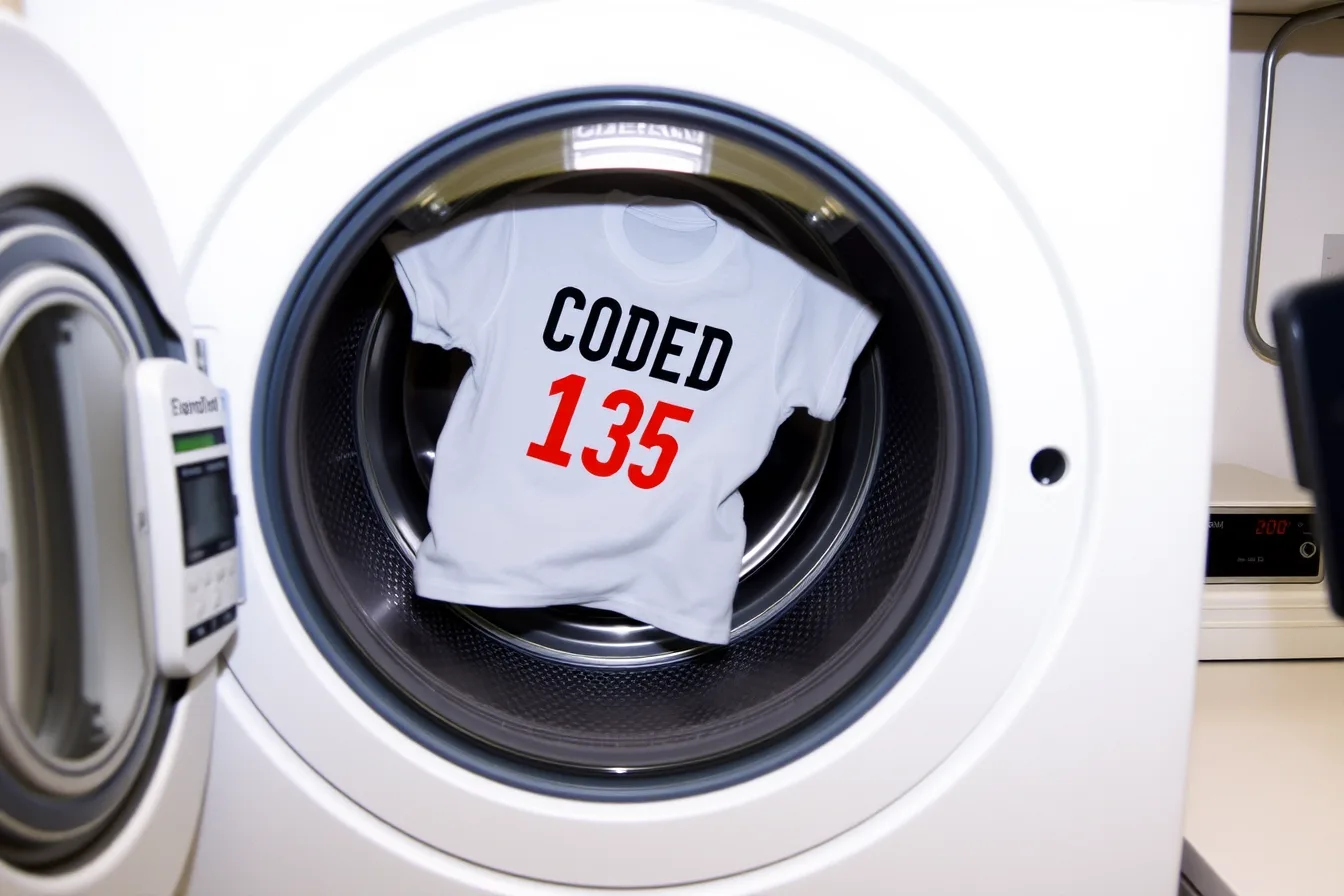
Every specimen gets a code. Keep the code visible in photographs without marking the print or a measurement area.
Build the coded sample set
- Decorated specimens assigned to care intervals
- One decorated unwashed control
- One undecorated garment control
- A retained production reference
- A known passing or failing reference
Measure and photograph before care
Condition all specimens for the same stated time in the same environment. Lay each garment flat without pulling. Mark stable measurement points, then record garment length and width, graphic width and height, placement, seam position and any other required dimension.
Photograph the full front or back, critical edges, fine detail, color fields and any existing defect. Fix the lighting, camera position, exposure, background and scale, and keep them fixed for every later interval. A photograph supports the physical inspection; it does not replace it.
Fix the laundering conditions
Record washer make and model, machine type, and selected program. Note water temperature setting and measured value where required. Record water level, load mass, ballast type, and detergent identity and dose. Note additives, specimen orientation, and cycle start time. Unknown household products do not belong in a controlled trial.
Record dryer make and model, drying program, temperature setting, and load. Also record end point and cool-down, or the full line-drying method. State whether garments are turned inside out, fastened, bagged or separated. Follow the care route the product will carry unless a separate stress screen has a written purpose.
AATCC's summary for TM150 dimensional changes of garments names standard parameters for washing temperatures, agitation cycles and drying procedures, and flags a possible limitation for certain stretch garments. That scope is why laundering conditions belong in the record as named variables. It does not hand you a procedure, and it does not make an internal program equivalent to TM150.
Control the sequence
Build the cycle log before the first load. Assign specimens to inspection points so repeated handling does not become an unrecorded variable. If one garment runs through every interval, write that down. If separate garments stop at each interval, balance their production identities.
Control the wash sequence
- Build the cycle log before the first load
- Assign specimens to inspection points
- Write down if one garment runs every interval
- Balance production identities if separate garments stop
- Do not change detergent, load, machine, cycle, operator or drying method
- If a change is unavoidable, record it immediately
- Decide whether affected results still count
Do not change detergent, load, machine, cycle, operator or drying method halfway through a comparison. If a change is unavoidable, record it the moment it happens and decide whether the affected results still count.
Inspect the same way every interval
After each planned interval, condition specimens for the same stated time. Compare the washed specimen against its unwashed reference under the same light and orientation. Look at the whole garment before you magnify a defect.
Inspect every interval the same way
- Photograph and note overall appearance
- Check color change and staining
- Map cracks, peeling, edge lift, missing areas
- Check tack, hand, abrasion, surface damage
- Measure graphic and garment dimensions
- Record skew, twist, seam puckering, distortion
- Score every result against its written limit
"Still looks good" is not a result. Write what changed, where, how much, and whether it passed.
Handle a failure
Stop the decision that sample covered. Preserve the garment as it came out of the dryer: no re-pressing, trimming, rewashing or spot cleaning before it is documented.
Photograph the defect and note the first interval where it appeared. Quarantine related production if the order is already running. Then walk the build: blank and lot, artwork, pretreatment, ink or film, storage.
- equipment settings
- actual heat evidence
- pressure distribution
- cure or press record
- time before first wash
- wash conditions
- measurement process
Change one planned factor at a time, or run a designed comparison. A clean rewash after an undocumented repair does not erase the failure.
Release the result
The final report states:
- objective
- scope
- exclusions
- sample plan
- specimen codes
- process build
- care method
- cycle log
- raw observations
- photographs
- measurements
- deviations
- failures
- corrections
- disposition
- the name of the person who approved it
Apply the result only to the materials and process range it represents. Requalify after a real change to the garment or lot behavior. Also requalify after a change to pretreatment, ink, film, or adhesive. Requalify after a change to equipment, settings, artwork construction, or care statement.
Common questions
How many wash cycles should a shop use?
Take the count from the product requirement, the claim on the label, the customer agreement and any qualified method you are actually following. There is no universal number that fits every decoration. Write the number down before you start, because changing it later turns a test into a guess.
Can a household machine support an internal comparison?
Yes, if you state the limitation and control and record the conditions. What you cannot do is call the output a standard test. That name belongs to the method you met, with its equipment, training and controls.
Should garments be turned inside out?
Follow the care instruction the product will carry, or the written study design. Record the choice either way, because turning a garment inside out changes which surface the drum and other pieces rub against.
What invalidates a comparison?
Any untracked change:
What invalidates a comparison
- a different specimen
- load
- detergent
- cycle
- temperature
- drying method
- conditioning time
- inspection light
- process build One unrecorded swap is enough to make two results incomparable, and no amount of later measurement recovers it.