Guides
Apparel blank guide: fibers, fabric structures, weight, color, seams, fit, and print behavior
An apparel blank guide to fiber, knit structure, weight, color, seams, fit and print behavior, so decorators qualify blanks before ink touches cloth.
What to take away
- A blank is part of the decoration system, not an interchangeable background.
- Fiber content alone cannot predict print quality, shrinkage, heat response, opacity or hand.
- Record supplier, style, color, size, fabric weight and unit, knit, finish, construction and purchase lot before any test.
- Raised seams, pockets, zippers and hoods change platen contact and placement, so run a dry placement test first.
- Qualify the exact style, color, size range, batch and decoration method together, then freeze an approved reference.
An apparel blank carries the print, and it also changes the print. Fiber, yarn, knit, dye, finish and thickness decide how the surface takes ink. Pretreatment, adhesive, thread, pressure and heat also matter. Two shirts that look alike on a supplier page can behave differently on the press, and again after laundering.
Start with a blank specification
Write the supplier style number, never a casual description like heavy black tee. Record supplier, style, color name, and size.
Record labeled fiber content, country of origin, fabric weight and its unit.
Record knit or weave, yarn description, finishes, care label, and purchase lot.
Add the construction details that decide placement and contact:
- tubular or side-seamed body;
- shoulder tape and neck rib;
- pocket, zipper, placket, hood, drawcord and eyelet positions;
- panel seams, darts, coverstitching and raised seam allowances;
- brushed or looped interior;
- stretch direction and recovery;
- coating, water repellency, silicone, softener or garment wash;
- usable flat area by size.
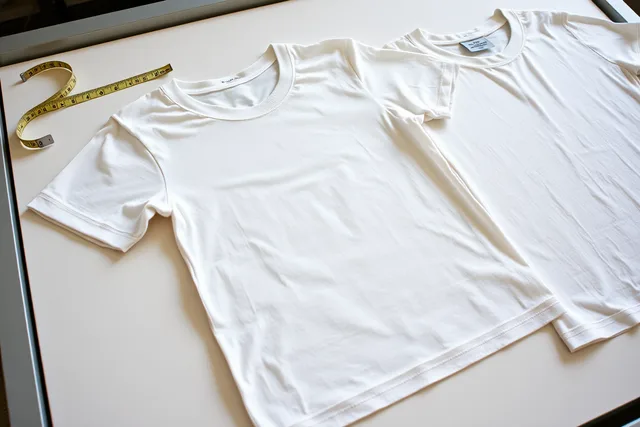
Photograph the front, back, label, inside construction and any obstruction. Measure a representative sample instead of copying the nominal size chart into the production record.
Separate fiber from fabric
Fiber content says what the material is made from. Fabric construction says how yarns or fibers form the sheet. Jersey, rib, interlock, fleece and woven twill do not become equivalent because they share a cotton percentage.
Pratt Institute's Textile Research Library describes knits as connected yarn loops. Its knit construction reference separates these types:
- single jersey
- two-sided interlock
- rib
- tricot
It includes differences in edge curl, thickness, stretch and surface structure. That is why a decorator identifies the knit rather than writing "cotton fabric."
Fiber and construction influence possible behavior without guaranteeing it. Yarn twist, stitch length, surface hair and knitting tension all move the result. Dyeing, finishing, storage and garment assembly also move the result. Treat supplier data as the start of qualification, then test the goods you actually received.
Read weight in context
Fabric weight is stated per area, in ounces per square yard or grams per square meter. It is not the weight of one finished shirt. Record the number, the unit, the test basis and any tolerance the supplier publishes.
A heavier fabric may feel more substantial and may hide an underbase better. Weight alone proves nothing about density, smoothness, opacity, durability, warmth or printability. A loose structure and a compact structure can share a nominal area weight, so compare weight against stitch density, thickness, stretch and surface texture.
Treat color as a material variable
Garment color changes both the visual and the thermal problem. A dark substrate may need an underbase or a more opaque ink system. A heather creates intentional variation. Fluorescent, garment-dyed, mineral-washed and deeply dyed synthetic blanks each need their own test.
Record the supplier color name, the purchase lot and an approved physical reference. Inspect under consistent lighting. Do not combine lots because the cartons carry the same name. Test heat and process response on the darkest or otherwise highest-risk color, then confirm the remaining colors instead of assuming equivalence.
Map the printable surface
Lay each size flat without stretching it. Mark the centerline and stable reference points. Measure the usable area around collars, armholes, side seams, and pockets. Also measure around zippers, hoods, and hems.
The same graphic usually needs a placement rule rather than one absolute coordinate across all sizes. A fixed distance from the collar can sit low on a small garment or crowd a hood seam on a large one. Define the datum, nominal placement, allowed tolerance, artwork dimensions and any size-specific change.
Raised seams and hardware prevent even platen or press contact. Thick fleece compresses. A pocket creates multiple layers. A zipper can damage equipment or leave a pressure gap. Run a dry placement test before the blank meets ink or heat.
Evaluate fit and dimensional stability
Measure chest width, body length, sleeve length, shoulder, hem and pocket on several units across the size range. State how the garment is conditioned, laid out and measured. Record individual values, not only an average.
Run the intended decoration and care cycle on representative samples, then remeasure from the same points. Note length and width change. Twist, skew, seam puckering, rib growth, print distortion and fit change. A blank can sit inside a supplier size tolerance before printing and still fail the finished-product requirement after heat and laundering.
Build a method-specific test matrix
| Variable | What to test | Possible failure |
|---|---|---|
| Surface | Detail, opacity, edge, hand | Fibers through print, rough edge, weak coverage |
| Heat | Actual time, temperature, pressure | Scorching, gloss, distortion, migration |
| Stretch | Print and substrate together | Cracking, lifting, poor recovery |
| Moisture or finish | Pretreatment, ink, adhesive | Staining, repellency, weak bond |
| Construction | Seam and hardware clearance | Uneven contact, misplaced graphic |
| Care | Labeled and proposed cycle | Shrinkage, peeling, fading, shape change |
Use the exact production system. A successful screen print does not qualify the same blank for a heat transfer, embroidery or direct-to-garment print. Approval on white does not qualify black, red or a heather version.
Control approval and substitution
Keep an approved decorated reference, or a controlled set of photos, measurements, color targets, test results and retained material. Record supplier, style, color, and size. Also record purchase order, received date, batch identifier, and approval status.
Require a new review when any of these changes:
- supplier
- factory
- fiber percentage
- yarn
- fabric weight
- knit
- finish
- dye lot
- color
- construction
- care label The word "equivalent" is a purchasing proposal, not proof of equal production behavior.
Common questions
Is 100 percent cotton always the easiest blank to print?
No. Here are the details cotton content does not reveal:
- surface hair
- knit density
- finish
- moisture
- color
- shrinkage
- construction Test the specific blank with the specific process.
Does a higher fabric weight mean better quality?
No. Weight is one measurable property. Suitability depends on structure, yarn, finish, construction, consistency and the decoration method. Judge the blank against the job.
Can one approved size represent the whole range?
It may not. Placement area, seams, pocket scale, hood overlap, fit and construction can change by size. Check every size, or use a documented sampling plan that covers the risk.
When should a blank be requalified?
Requalify after any relevant change:
- material
- supplier
- factory
- color
- batch
- finish
- construction
- size
- method
- setting
- whenever production evidence stops matching the approved result
In this guide
- How to evaluate and document a garment blank before printingA blank is approved only when the ordered garment, in its real colors and sizes, survives the exact decoration and wash sequence you will run.
- Cotton, polyester, blends, fleece, and performance fabrics compared for decorationFiber, knit, dye and finish decide how cotton, polyester, blends, fleece and performance knits behave under a squeegee, a press or a needle.
- Garment blank, fiber, fabric, dye, seam, shrinkage, and batch checklistGarment blank checklist for identity, fiber, fabric, color, finish, seams, dimensions, shrinkage, heat response, decoration trials, care, approval, and batches.
- Garment blank problems: dye migration, shrinkage, scorching and mixed batchesGarment blank problems like dye migration, shrinkage, scorching and mixed batches require separating fabric faults from press faults and testing one variable.
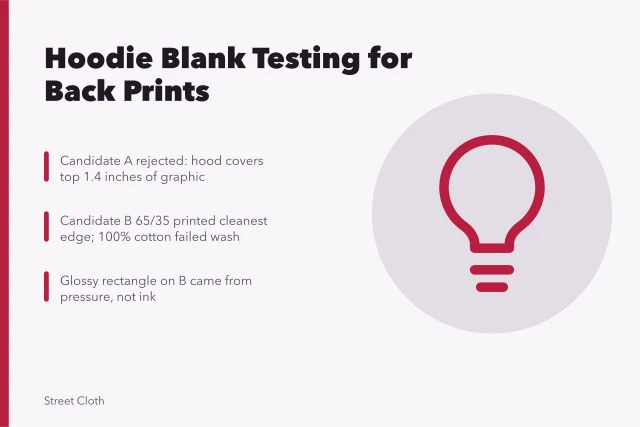
- Selecting a stable hoodie blank for a multicolor back print caseThree hoodie blanks tested against one 10-inch three-color back print, showing why the cheapest garment lost and what the approval had to freeze.