Guides
Street Style Mistakes That Hide Garment Quality
Street style mistakes can hide fabric, fit, and print quality. Learn what to inspect in streetwear garments as they move, catch light, and wear.
Street style mistakes often start when a garment is judged from a photograph rather than as something made to be worn. Fabric, construction, fit, and decoration determine what reads outdoors and what holds up beyond the frame.
The nine mistakes below can hide a garment’s qualities or make its appearance misleading. Some are easy to spot in a photo; others require checking the fabric, fit, or decoration directly. Each can be checked before choosing or approving a piece.
Fabric and decoration affect how a garment looks and moves. Cotton jersey, fleece, and twill do not drape alike, and a fabric’s stated weight in GSM (grams per square meter) is a specification to compare, not a quality verdict by itself. Screen printing deposits ink through a screen, DTG prints directly onto a garment, DTF transfers a design printed on film, and embroidery builds a design with stitches. None of those method names alone proves durability.
Read the mistakes as checks on streetwear garments, not just as advice for making a better outfit photograph. The aim is to see how materials, construction, fit, and graphics behave in real light and motion, and to separate visible appearance from claims that need a specification or test.
What to take away
- Check a garment from a distance, in motion, and in ordinary daylight—not only in a close-up or posed image.
- Read fabric, fit, and decoration together; a material or print-method name alone does not establish quality.
- A phone, a friend, and ten minutes can reveal how a piece looks and moves, but a photo cannot establish its fiber content or print durability.
Checking streetwear garments outdoors
1. Fine detail that vanishes at ten meters. A small check, a delicate print, a narrow stripe, or fine jewelry can turn into a blur at street distance. Look at the overall silhouette, blocks of color, and the scale of the graphic as well as its close-up detail. Test by photographing the garment across a street on a phone and viewing the result at thumbnail size.
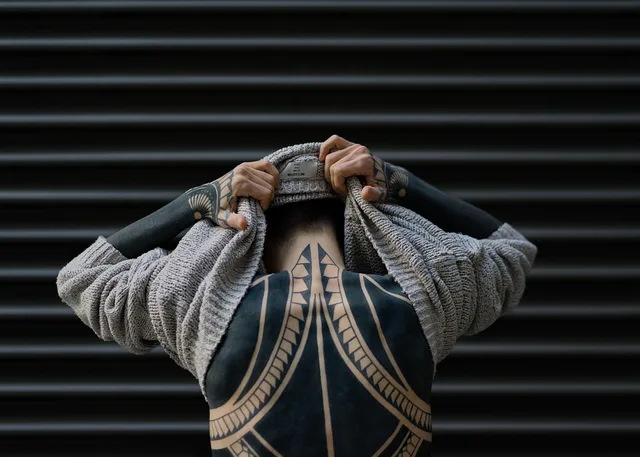
2. Clothes that only work standing still. A garment that looks right in a mirror may shift when worn. Walking makes the fabric move, the hem lift, and the jacket open. Check how the cut moves on the wearer rather than assuming that a posed image shows the fit; walk twenty paces before deciding.
3. Ignoring the fabric specification. Fabric weight and fiber content affect how a garment hangs, but neither should be judged from an image alone. Read the fiber-content label and compare the stated composition and GSM with the intended use and silhouette, then check the actual hand and drape. A fabric weight specification is useful context, not a substitute for evaluating the garment.
4. Color judged against the wrong light or background. The street setting can make a garment blend into a wall, pavement, or crowd. Check the color against the place where it will be worn, then look again under different light. Low sun near the golden hour can warm colors, while midday overhead light can change how surfaces and shadows appear.
5. Assuming weather performance from an outfit photo. A coat or other layer can hide how an underlying garment hangs, and a styled image cannot establish weather protection. Treat claims such as warmth or water resistance as specifications to verify in the product description, not conclusions drawn from appearance.
Inspecting the garment, not just the image
6. Treating a decoration label as a durability test. Screen printing, DTG, DTF, and embroidery describe methods, not how a finished graphic will perform. Inspect print thickness and edge adhesion, and gently stretch the decorated area to look for cracking or lifting. For a production sample, wash according to its care instructions and inspect for cracking, peeling, or fading; a photo cannot verify cure or wash durability.
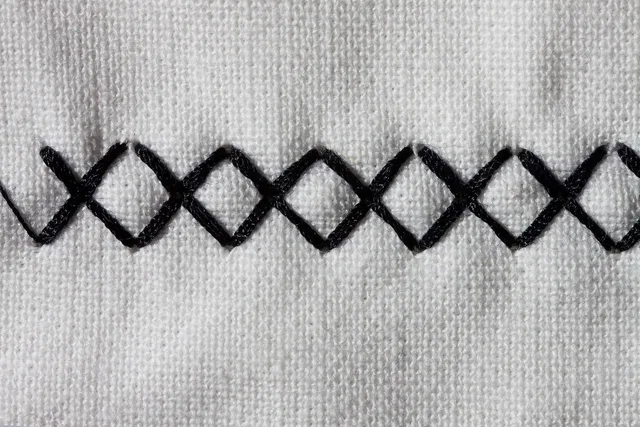
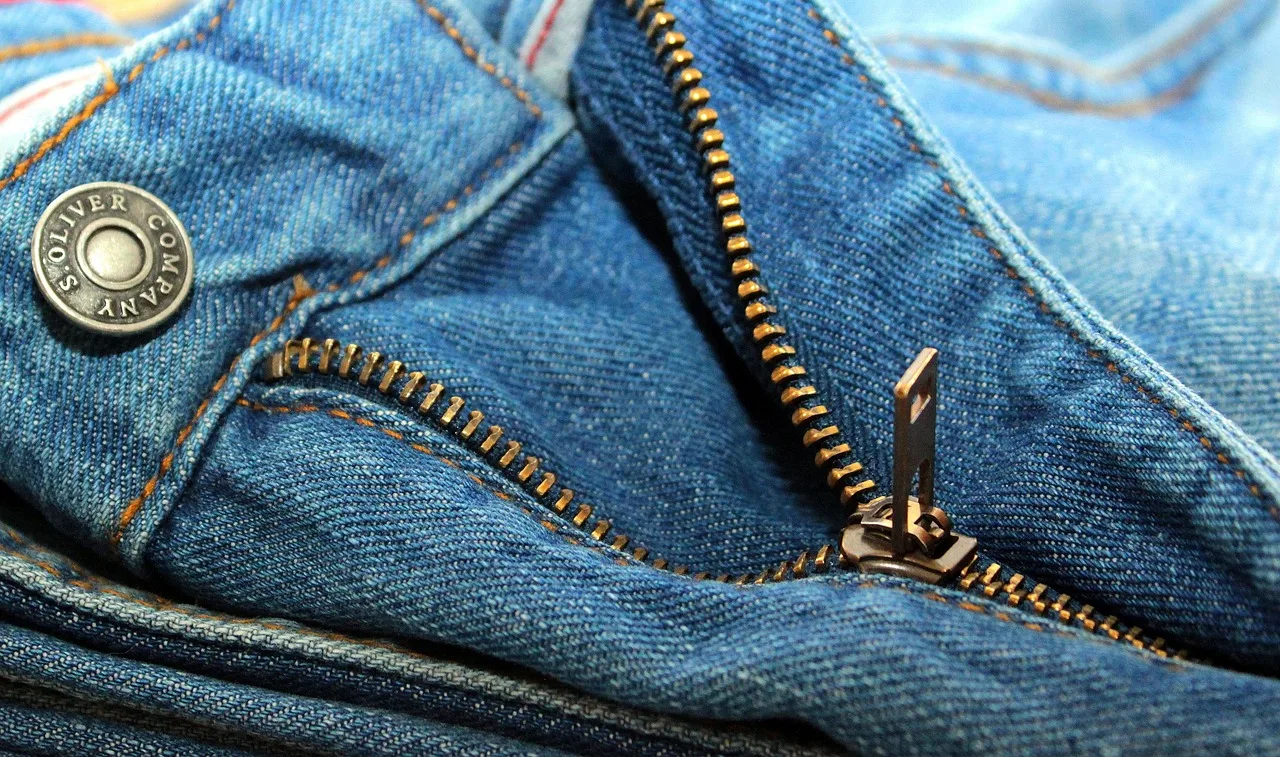
7. Inspecting only the front. A styled image may hide the garment’s construction. Check for skipped stitches, loose threads, puckering, uneven seams, and hems that open under light strain. Look inside for seam and hem finishing, and check for lining or gussets where the design calls for them; a coverstitch or double-needle hem is a construction detail, not proof of quality by itself. Compare the full garment with its product specifications.
8. Treating a model’s fit as a sizing guide. A posed image cannot establish how the same garment will fit another person. Compare the size chart’s chest and body-length measurements with a similar garment you own, and check whether the chart gives garment measurements or body measurements. Consider the cut and intended silhouette rather than relying on the model’s proportions or stance.
9. Treating a caption as proof of a garment claim. Words such as “heavyweight,” “embroidered,” or “screen printed” describe claims that a photograph alone cannot verify. Check the product description or production information for fabric content, weight, and decoration method. A brand attribution is a claim, not evidence of the garment’s construction.
A quick streetwear photo check
A ten-minute check
| Mistake | Check | Time |
|---|---|---|
| Detail lost at distance | Phone photograph from across a street, viewed at thumbnail size | Two minutes |
| Only works standing | Walk twenty paces on video, watch it back | Two minutes |
| Wrong shoes | Walk the actual route, or a similar surface, in them | Five minutes |
| Color lost against background | Photograph at the location, or against a similar wall, at the same hour | Two minutes |
| No weather plan | Look at the forecast; decide the coat | One minute |
This is a quick visual screen, not a complete garment-quality test. Footwear choices may affect a street-style image, but they say nothing about a garment’s fabric, construction, fit, or decoration; use the direct checks above for those.
A useful check compares the garment itself with its specifications instead of relying on an outfit impression. Look at the piece in motion and in more than one light, then distinguish what you can observe from what requires a product or production record.
Common questions
Is there a mistake that a good photographer can rescue?
A photographer can improve how color reads by changing position or light. A picture cannot fix a garment that restricts movement or conceal a construction issue once the piece is worn.
What single change improves most outdoor photographs?
One large graphic element instead of several small ones. A single block of strong color or a clear shape is easier to read at a distance. Scale matters for graphics and accessories, but it does not replace checking the fabric or decoration itself.
Do I need a release to post a street photograph of a stranger?
In the United States, there is no single federal model-release statute. In California, the California Civil Code addresses certain commercial uses of a person’s likeness; rules vary by state and context. For commercial apparel use, obtain written permission. A model release records permission, not garment specifications.
Does golden-hour light make an outfit look better than it is?
It can. Golden-hour light warms colors and may hide creases or surface details. Judge the garment in ordinary daylight as well, and treat the golden-hour image as one view rather than proof of its color or quality.